
Cape Cod & Southern Coastal Massachusetts
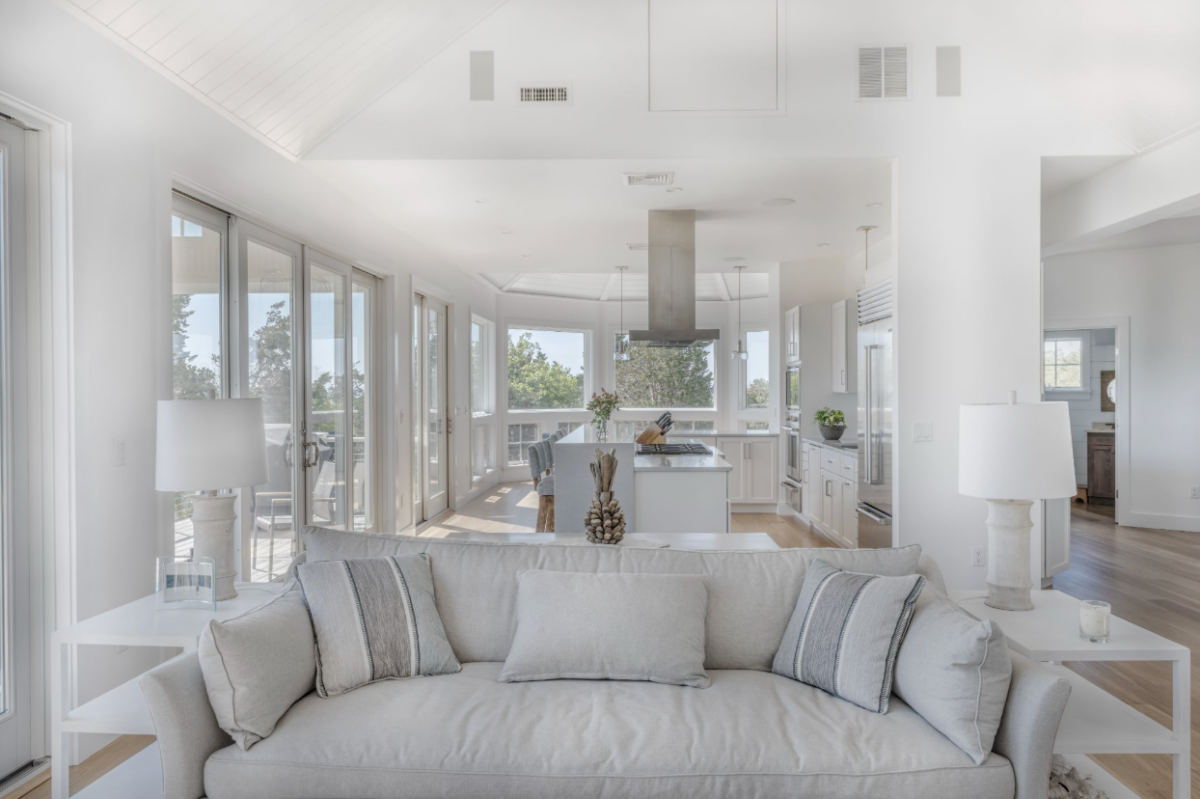
There’s a moment in certain homes, usually just after you step inside, when everything feels settled.
You can’t always put your finger on why. The light makes sense. The rooms connect without effort. Nothing announces itself, yet nothing feels accidental either. You move through the space easily, and somewhere in that ease, you realize the house has been thought about very carefully.
That quality, that feeling of a home that simply works, is harder to achieve than it looks. And it almost never comes from a single decision.
In one of our custom home builds here on the Cape, that was exactly the goal. Not to make something flashy. Not to maximize square footage for its own sake. But to build something that fits, a home that functions beautifully, captures light the way the Cape deserves, and responds honestly to the landscape it was built within.
For homeowners thinking through a custom build across Cape Cod and Southern Coastal Massachusetts, this project is worth walking through. Because the decisions made here aren’t unique to this house. They’re the same decisions that determine whether a custom home becomes something lasting, or just something new.
START WITH FLOW. FINISHES COME LATER.
There’s a tendency in custom home planning to lead with the visible stuff. Countertops. Tile. Hardware finishes. And those decisions matter, but they’re not where a successful project begins.
In this home, the real work started with circulation.
From the earliest design stages, the floor plan was built around how the family actually moves through a day. How mornings start. Where people gather after coming in from outside. How the kitchen connects to the rest of life rather than operating apart from it.
The kitchen was positioned to become a genuine hub, not the room you disappear into, but the room that anchors everything around it. Sightlines run from the kitchen through the living area and out toward the landscape beyond. Walkways move around gathering spaces rather than through them. The stair connects the levels without owning the ground floor.
These aren’t changes people photograph. But they’re the ones people feel every single day, and they’re the reason the home works the way it does.
Any custom home worth building starts here. Before the aesthetics, there has to be ease.
LET THE LIGHT LEAD
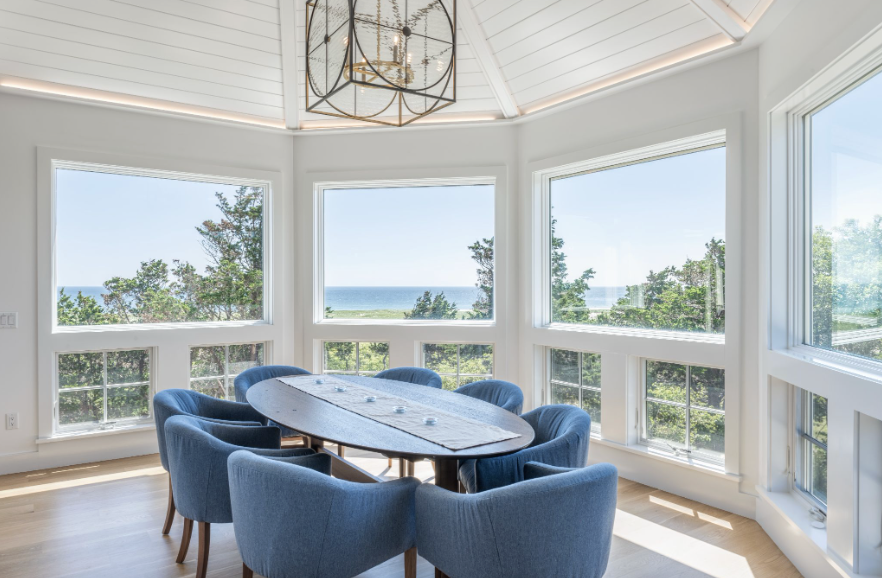
Cape Cod light is specific. Soft and diffuse in the morning, sharp and reflective midday, warm and low by late afternoon. It shifts with the seasons in ways that are dramatic enough to define how a room feels at different times of year.
Designing around that rhythm, rather than ignoring it, is one of the highest-value decisions made in a custom build. And it costs nothing extra when it’s considered from the beginning.
In this home, window placement was treated as a structural decision, not a finishing detail. Large grouped windows in the main living areas bring in consistent daylight without the glare problems that come from isolated oversized glass. Dormered upper levels pull light deeper into the bedrooms while expanding usable floor area. In a few key rooms, corner window arrangements capture more than one exposure, softening shadows and keeping the space feeling alive as the light moves through the day.
The result is a home that feels bright in February as much as it does in July. For anyone in the early stages of planning a custom build on the Cape, that’s worth more than almost any finish upgrade. Good light reduces dependence on artificial lighting, makes materials look better, and fundamentally changes how comfortable a space feels to be in.
BUILT-INS THAT FEEL LIKE THEY WERE ALWAYS THERE
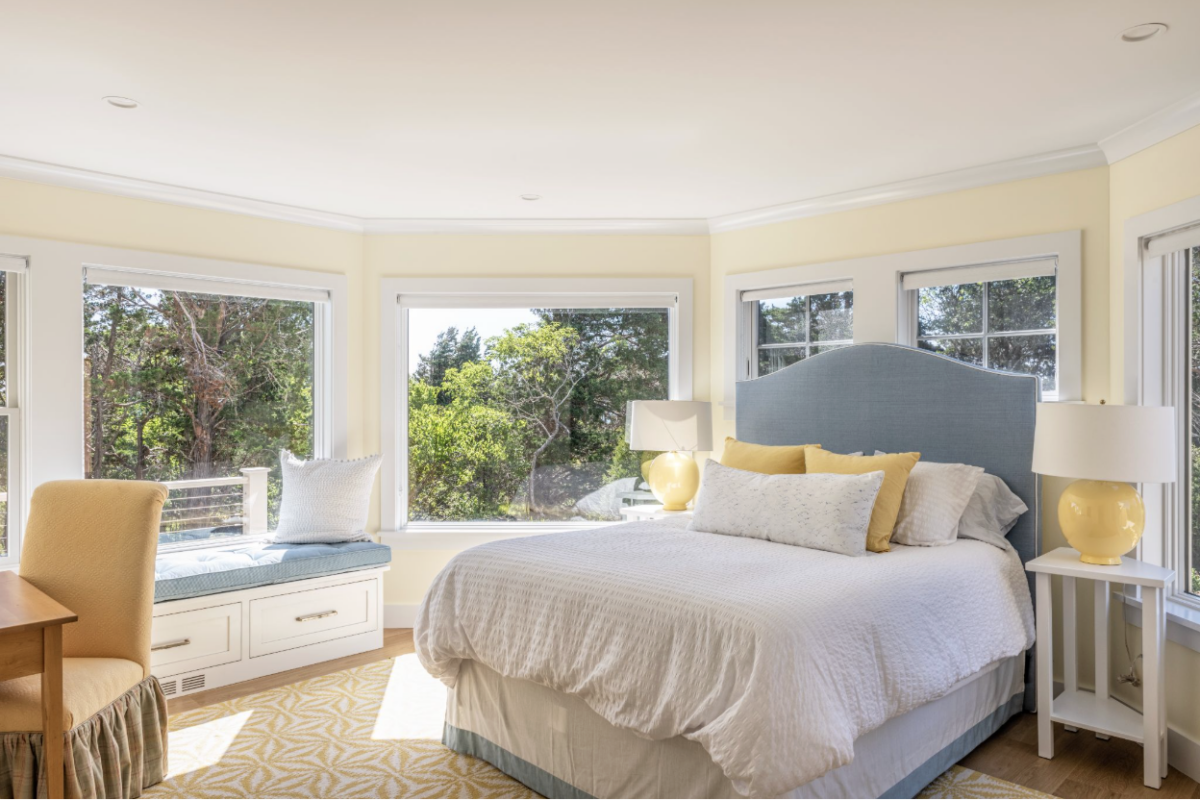
The features that tend to matter most in a well-designed home are often the ones you notice least. Not because they’re understated, but because they’re so well integrated that removing them would feel like taking something structural away.
This home has several of those.
A window seat set into a quiet corner of the bedroom area. Open shelving built precisely to the depth of the wall rather than projecting into the room. Custom cabinetry that bridges the kitchen and adjacent living space in a way that defines the zones without dividing them.
None of these read as additions. They read as architecture, because they were designed as architecture, from day one.
In coastal homes especially, this kind of integration matters. Storage needs shift with seasons, with guests, with the particular way life accumulates near the water. When storage is designed in from the beginning, it disappears into the home in the best possible way. It’s just there, doing its job, without asking to be noticed.
MATERIALS CHOSEN FOR THE LONG RUN
A home on the coast doesn’t just need to look good on the day it’s finished. It needs to look right ten years from now, and perform well while it’s doing it.
Salt air is patient. It finds every compromise in a material choice eventually. Which is why this home was built around things that age gracefully rather than things that require constant management.
Light-toned wood flooring throughout, durable enough for real use, warm enough to hold the interior palette together. Neutral cabinetry that reflects light without the cold flatness that all-white interiors can take on over time. Exterior shingles and trim selected to weather naturally in a salt-air environment rather than fight it. Hardware and fixtures in finishes that resist corrosion without looking clinical.
The interior palette stays deliberately restrained, soft whites, muted blues, natural linen textures. Not because it’s safe, but because restraint is what allows the light and the landscape to remain the dominant presence in every room. The house steps back. The Cape steps forward.
For anyone weighing material decisions during the planning of a custom build, this is the lens worth using: not what looks best right now, but what will still look right in fifteen years.
OUTDOOR SPACE THAT’S ACTUALLY PART OF THE HOME
In home design, outdoor living can easily become an afterthought, resolved at the end of the process after everything interior has been figured out. A deck gets positioned wherever space allows. And because it was planned last, it tends to function last.
This home was designed differently.
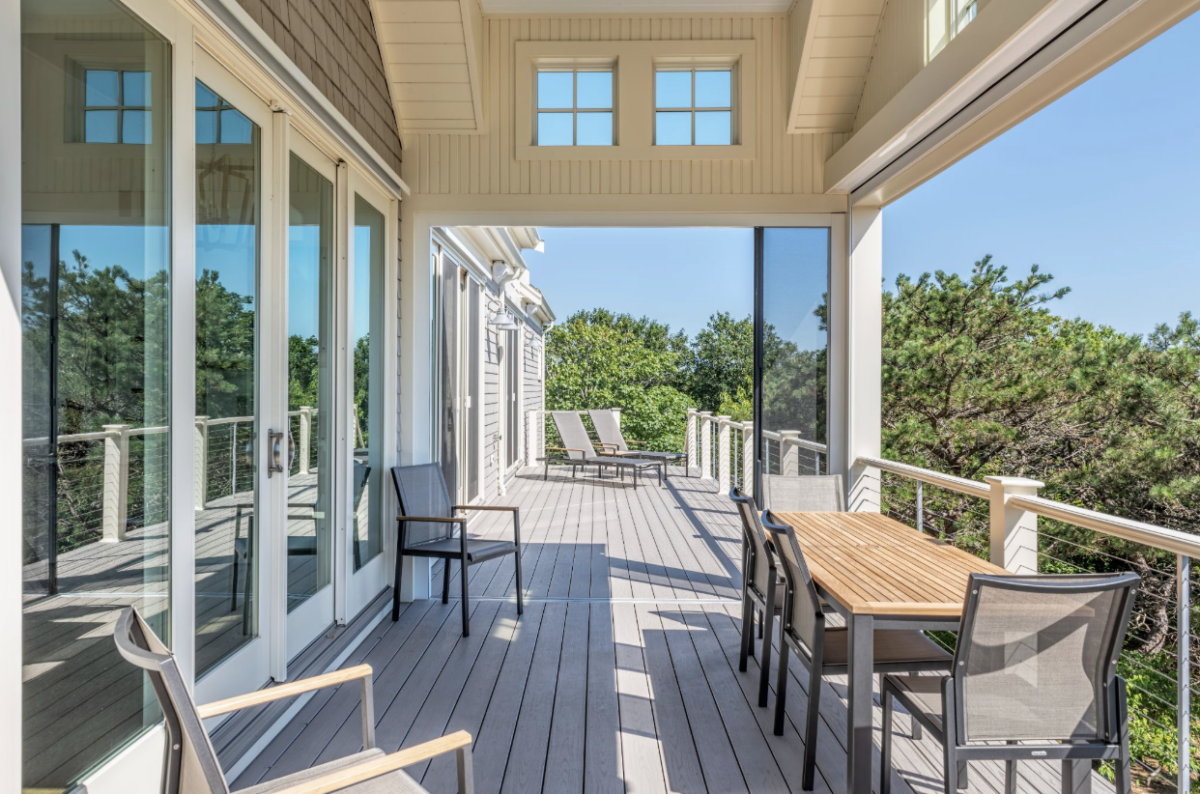
The main deck is positioned in direct alignment with the kitchen and living area, not off to the side, not accessed through a secondary door, but as a genuine extension of the interior. The transition between inside and outside is immediate and intuitive. The scale accommodates both a full dining setup and quieter seating without feeling cramped or oversized.
The railing system was chosen specifically to preserve sightlines rather than interrupt them, because a deck that blocks the view it was built to access has missed the point entirely.
Below the main level, additional yard space provides a secondary gathering area that’s simple and low-maintenance by design. Because on the Cape, where outdoor use is tied to seasons and weather, the easiest spaces to maintain are the ones that actually get used.
QUIET LUXURY IS CONSISTENCY, NOT ACCUMULATION
What stays with you about this home isn’t any single feature.
It’s the fact that everything is pulling in the same direction.
The layout decisions, the window placement, the built-ins, the material palette, the outdoor connection, none of them are trying to be the thing you remember. They’re all just working. Together. Quietly. In a way that makes the home feel grounded and complete from the moment you walk in.
That’s what thoughtful coastal architecture actually looks like. Not the loudest version of luxury. Not the most features per square foot. But a consistency of intention that you feel from the first room to the last, and keep feeling, season after season, for as long as the home stands.
WHAT THIS MEANS FOR YOUR BUILD
If you’re considering a custom home on the Cape or along the Southern Coastal Massachusetts shoreline, this project is a useful reference point, not for the specific choices made, but for the order in which decisions were prioritized.
Start with how the home needs to flow. Solve for light before you solve for finishes. Design storage and built-in details into the architecture from the beginning, when they can still become part of the structure rather than elements placed on top of it. Choose materials for longevity first, appearance second, because on the coast, the two are more connected than they might seem.
The homes that hold up, in quality, in feel, and in value, are the ones where the fundamentals were taken as seriously as the surfaces.
That’s the standard Cape Dreams builds on every project.
And it’s what makes the difference between a home that photographs well and one that genuinely lives well, for decades.